
Linenhall Parade
Linenhall Parade was built in the mid-1920s on the site of the Linen Hall Barracks, itself built alongside the eighteenth-century Linen Hall, once the centre of Dublin’s linen trade. The barracks was burned out in 1916, and the site lay derelict for almost a decade afterwards.¹
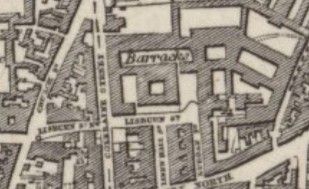
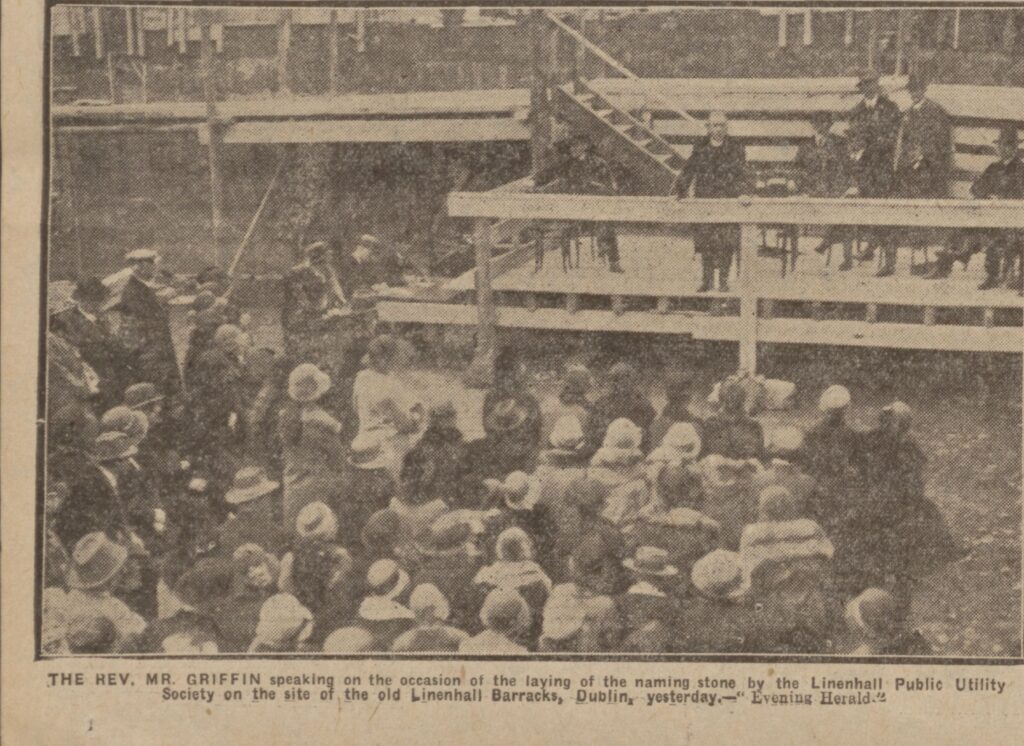
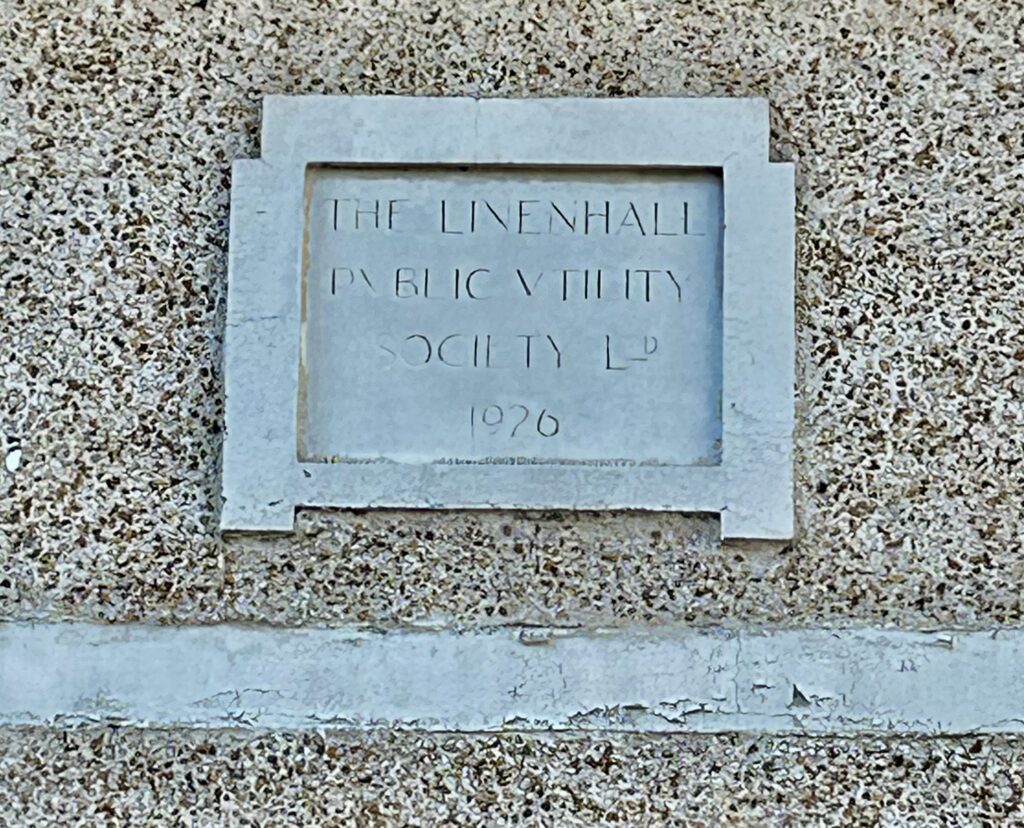
In September 1925 the Corporation agreed to take a 99-year lease of the barrack area, about 2¼ acres, from the Commissioners of Public Works, for the erection of some seventy working-class dwellings.² A year later the site had been cleared, and arrangements made with the Linenhall Public Utility Society to build the houses: twenty-five of five rooms, thirty-eight of four, each with scullery, bath and hot water, on a 99-year lease at £2 per house per annum.³ The Society had grants of £5,540 towards the work.⁴ The naming stone was laid on 14 October 1926, the Rev. Mr Griffin addressing the gathered crowd.⁵
By October 1927 the houses were built on two new roads laid out through the site: one continuing Lurgan Street northward, the other connecting that extension to Coleraine Street. The Corporation Streets Section recommended the first be named Parád Halla an Lín, Linenhall Parade, after the barracks and the Linen Hall that had stood on the site.⁶ The Corporation approved the name and took the road in charge on 12 November 1927.⁷
See also Linenhall Terrace, named at the same time.
- ‘Linen Hall Barracks Ruins’, Irish Independent, 14 Dec. 1925, p. 8.
- Reports 1925/224.
- Reports 1926/218.
- Reports 1926/218.
- ‘Picture Stories of the Day’, Evening Herald, 15 Oct. 1926, p. 8.
- Reports 1927/209.
- Minutes 1927/432.
One Comment